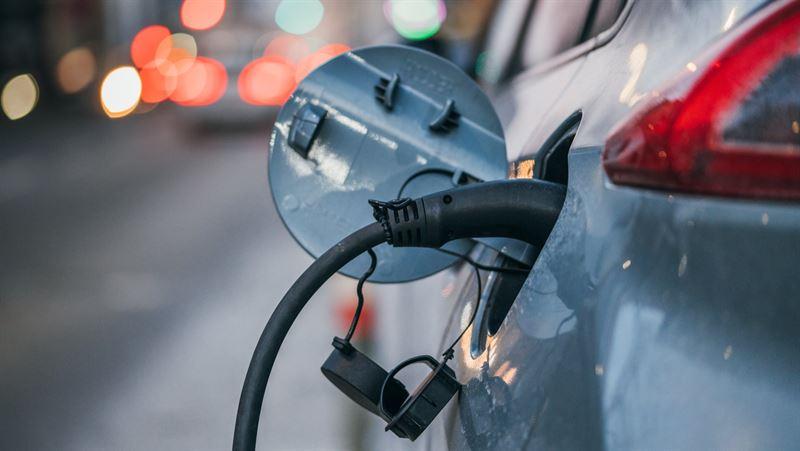
Fast charging shortens the life of vehicle batteries, but is necessary on longer journeys with electric vehicles. Researchers at Chalmers University of Technology, Sweden, have now developed a new AI method that adapts fast charging to the health of the battery. Their study shows that battery life can be increased by almost 23 per cent without extending the charging time. All that is required is an update of the vehicle’s software.
When individuals or companies consider acquiring electric vehicles, the possibility of fast charging is an important factor.
“For taxis or heavy vehicles in industry, for example, access to fast charging means a lot, but this is also true for passenger cars. Although private motorists usually charge their electric cars at home, the availability of fast charging outside the home is a crucial factor, as it facilitates commuting and driving over longer distances,” says Changfu Zou, professor at the Department of Electrical Engineering at Chalmers.
Electric vehicle batteries currently have a life of approximately 8-15 years*, depending on use and charging. Several studies of the European EV market* show that consumers who are considering buying an EV are concerned about the limited life of batteries.
The requirement for efficient fast charging is also in conflict with battery health, as such charging is stressful for the batteries and shortens their life.
Changfu Zou has taken on this challenge with Meng Yuan, Assistant Professor at Victoria University of Wellington, New Zealand, and a former researcher at Chalmers. In the recently published study, they show that it is possible to increase the life of batteries without significantly increasing the charging speed – with the help of artificial intelligence.
In the study, the researchers present an AI-based charging strategy that adapts the current during each fast charge to the battery’s chemistry and ‘state of health’. The adapted charging extends battery life by around 23 per cent compared to the standard method today. At the same time, the charging time is unaffected, give or take a few seconds.
“We show that it is possible to charge more or less as fast as today, but with significantly less long-term degradation of the battery,” says Meng Yuan.
When a battery is charged fast, a large current is forced into the various cells, which causes a greater risk of chemical side reactions, among other things. One of the most problematic is known as lithium plating, in which metallic lithium precipitates on the electrode instead of being stored correctly in the battery’s structure. This can reduce capacity and may also affect safety, as unevenness in the structure of the lithium can, in a worst case scenario, cause a short circuit.
“The risk of lithium plating increases with the age of the battery. However, the standard methods of charging today use the same current and voltage regardless of whether the battery is new or has been used for years,” says Meng Yuan.
The new, AI-based charging strategy is based on reinforcement learning**, in which the right actions are rewarded and thus reinforced. The training environment consisted of a model of one of the most common electric vehicle batteries on the market and a simulation of the parameters that have an impact on both charging time and battery health.
The AI model was trained to adapt the charging according to how charged or discharged the battery was at the time of charging. It also needed to take into account the overall health of the battery, as this is crucial to both capacity and electrochemistry. The result was a charging strategy that both keeps the charging time short and minimises harmful reactions.
“Our study shows that smart adaptation of the current during charging, taking into account the changing electrochemical state of the battery, can maximise both the performance and the life of the battery,” says Changfu Zou.
The new charging strategy is both easy and cost-effective to implement, according to the researchers: in principle, it could be implemented through software updates in the vehicle's battery management systems. However, some adaptation is needed for the method to be used generally.
“There are not so many different battery types today, but the method needs to be calibrated for it to be used by everyone. Using transfer learning, we can take advantage of what our AI model has already learned, and thus adapt the AI model to new batteries more quickly,” says Changfu Zou.
The next step is to test the method directly on physical batteries. The researchers hope that the AI-based charging strategy will make a significant contribution to the electrification of the transport sector.
“To reduce emissions and transition to a fossil-free society, it is important for people to be prepared to switch to electric vehicles. The possibility of fast charging, combined with an increased battery life, are important driving forces,” says Meng Yuan.
“And for the automotive industry, an almost 23 per cent increase in battery life can mean lower warranty costs, better resale value and more efficient use of critical raw materials,” says Changfu Zou.

Read the Spring 2026 edition free online →
Stay connected with NI's tech community: