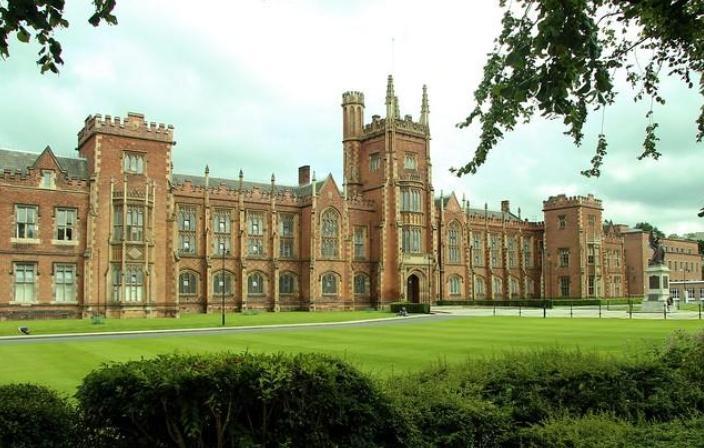
With an El Niño climate phenomenon expected to develop by the end of August, a Queen’s University climate expert has warned that the impact on weather patterns across the globe could be sudden and chaotic.
An El Niño weather pattern raises global temperatures and worsens some rainfall. The World Meteorological Organization (WMO), has predicted that there is an 80 per cent chance of El Nino conditions emerging between June and August.
Professor Graeme Swindles, who is a Professor of Physical Geography at Queen’s, says that this can cause sudden and chaotic changes to weather conditions. He explains: “When these powerful natural climate oscillations combine with the rapid pace of human‑driven warming, the impacts can be sudden, chaotic and severe – from extreme heat to flooding and drought.”
Research at Queen’s University Belfast shows that while the whole planet is changing, the Arctic is transforming at an especially alarming rate. It is warming several times faster than the global average.
Professor Swindles, who is also Editor in Chief of Critical Insights in Climate Change, comments: “A strong El Niño could further amplify atmospheric circulation changes that reach the high latitudes, potentially adding even more warmth to an Arctic already undergoing rapid and unprecedented change.
“This acceleration in the far north is a clear warning that the climate system is becoming more volatile, and societies should be prepared for larger and faster shifts in the years ahead.”
In Northern Ireland, a strong El Niño could lead to milder, wetter winters and potentially greater flood risk.
Professor Swindles explains: “This is because El Niño can shift the position and strength of the Atlantic jet stream, increasing the flow of warm, moist air toward Northern Ireland.
Read the Spring 2026 edition free online →
Stay connected with NI's tech community: