Northern Ireland businesses are calling on the UK Government to use tomorrow’s Budget to reduce the cost of employment and strengthen the conditions for economic growth. A new report published today (Tuesday) by NI Chamber and Queen’s University indicates that reducing employment costs is the most significant tax measure businesses believe would support growth, investment and job creation.
Three in four firms who responded to the Quarterly Business Insights Survey for Q3 2026 say a reduction in employer National Insurance contributions would have the greatest positive impact on their business.
Beyond tax, members’ priorities for the Autumn Budget centre on Northern Ireland’s share of UK funding. More than half (55%) want UK-wide business support and growth funding to reach Northern Ireland, while 47% said they want a fair and sustainable long-term funding settlement for the region.
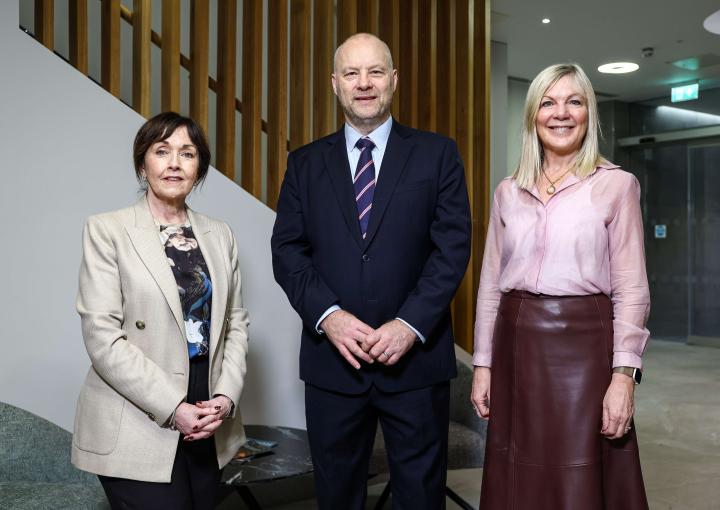
Suzanne Wylie, Chief Executive of NI Chamber, says the results reflect growing concern about the cumulative cost pressures facing employers.
"Businesses have delivered a very clear message ahead of the Budget. The most effective thing the UK Government can do to support growth is reduce the cost of employment.
"Our members represent every part of the economy, from micro-businesses and SMEs to some of Northern Ireland's largest employers. While individual challenges vary, employers are consistently telling us that rising employment costs are weighing on recruitment decisions and investment plans. Businesses want to grow, create jobs and invest. They need a Budget that supports those ambitions and reinforces the UK's competitiveness."
Stressing the importance of ensuring Northern Ireland is meaningfully considered in future discussions on the UK-EU relationship, Suzanne said: “If future UK-EU negotiations are about growth, then Northern Ireland must be at the centre of the conversation, not at the margins.
"Any new arrangements should deliver tangible reductions in the red tape facing Northern Ireland businesses and make it easier for firms to trade with their customers and suppliers."
While tax policy remains a matter for Westminster, NI Chamber also highlighted the importance of action by the Northern Ireland Executive to address barriers that continue to constrain growth and investment.
"The Budget is only part of the picture. The Northern Ireland Executive must also focus relentlessly on improving the environment in which businesses operate. For many firms, the ability to expand is being constrained by issues that are well understood and long-standing. These include planning delays, wastewater capacity constraints, energy infrastructure challenges and the need to ensure skills provision is better aligned with labour market demand. Addressing these barriers would unlock investment, boost productivity and support growth across sectors and regions."
Overall, around 85% of survey respondents report trading either well (41%) or reasonably (44%). Northern Ireland was among the stronger-performing UK regions in Q3 2026, sitting above the UK-wide balance on every activity measure at a time when UK-wide balances for domestic and export orders, cashflow and plant and machinery investment are negative.
In Northern Ireland, demand balances are positive in both the manufacturing and services sectors. The balance of firms reporting increased domestic (UK) orders over the past three months is +9 in manufacturing and +11 in services, against -2 and -4 UK-wide, and export orders are also positive (+6 and +1).
The labour market remains the defining feature. Northern Ireland has the highest share of firms trying to recruit of any UK region (87% of manufacturers and 72% of services firms). More firms increased than reduced their workforce in both sectors, and employment expectations for the next three months are positive. However, recruitment difficulties remain widespread, and much hiring is to replace rather than expand.
Cost pressures remain elevated, with price expectations standing at +60 in manufacturing and +43 in services. Labour costs are the most widely cited pressure, reported by 86% of services firms, the highest of any UK region, while for manufacturers, fuel (60%) and raw materials (82%) pressures are well above a year ago. Inflation remains the most cited growing concern, with a small number of free text responses pointing to rising software, IT and AI-related costs as an emerging pressure.
Commenting on the report, Richard Ramsey, Professor of Practice at Queen’s Business School, said:
"Northern Ireland's private sector performance compared favourably with the UK across most economic indicators in the third quarter. This chimes with other recent data and surveys. However, we must not lull ourselves into a false sense of security. Economic performance and confidence have ebbed and flowed over the last couple of years. The underlying trend has been less impressive. Beneath Northern Ireland's 'veneer of resilience', significant challenges remain. The cost of, and difficulties in hiring, labour has increased in prominence. Employers across the UK are eager to see at least some unwinding of the labour cost increases implemented by Rachel Reeves.
"The third quarter largely coincided with a period of geopolitical limbo between Iran and the United States. Unfortunately, a resumption in hostilities looks likely. Rising cost pressures have become increasingly evident across energy, shipping and raw materials. The cost-of-living and cost-of-doing business crises are set to ratchet up in the coming months. Consumer sensitive sectors face a challenging time ahead with UK consumer price inflation expected to exceed 5% in early 2027. Higher interest rates and demands for higher wage settlements will follow. Higher rates of inflation will also further erode the purchasing power of public expenditure and provide a further headache for Chancellor John Healey in next year's Spending Review. Whilst the focus this week is very much on the UK Budget, it is vital that Stormont secures and agrees a budget as soon as possible".
Reflecting on the picture overall, Suzanne Wylie concluded:
"Our members are remarkably resilient, but resilience is not a growth strategy. Businesses are telling policymakers what they need: lower employment costs, fewer barriers to investment, modern infrastructure and less friction in trade. Whether decisions are taken in Westminster, Brussels or Stormont, the test should be simple: do they make Northern Ireland a more competitive place to invest, grow and create jobs?"