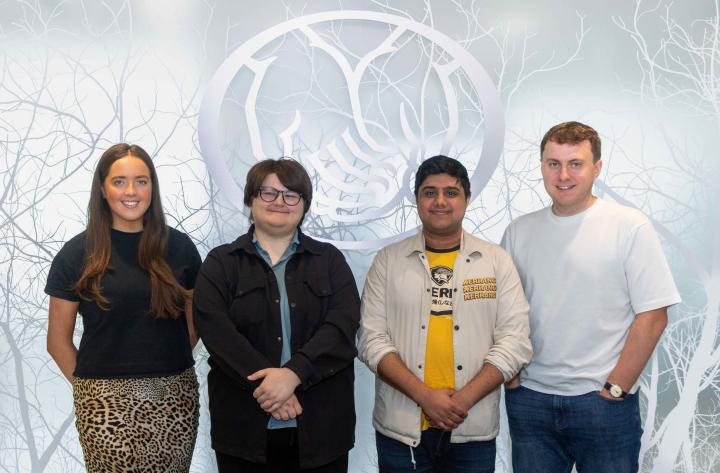
Sync NI hosted a roundtable of early-career professionals from across Northern Ireland's technology sector in Allstate's European Digital Centre of Excellence offices in Belfast.
Bringing together software engineers, placement students and recent graduates working in cybersecurity, cloud and data roles, the discussion provided valuable insights into what draws young talent to a technology employer and, just as importantly, what keeps them there. It was an opportunity to explore the intersection between employer branding and company culture as lived experience through the eyes of those beginning their career journey’s in the technology sector.
Unsurprisingly one unified message came through clearly: today's early-career professionals are excited by the opportunity to work with innovative technologies while continuing to develop their skills in supportive environments. For many, the appeal of an employer begins with access to modern tools and cutting-edge platforms, particularly artificial intelligence and cloud technologies, but extends far beyond the technology itself.

Participants highlighted the importance of organisations that actively invest in learning and development. Access to new tools is valued most when combined with structured training, mentorship and opportunities to learn from experienced colleagues. Whether entering the industry through a traditional computer science route or transitioning from another discipline, young professionals consistently emphasised the positive impact of employers that provide clear guidance and ongoing support throughout their development journey.
Company culture and values also emerged as key considerations. Participants spoke positively about organisations where values are reflected in everyday actions and where leadership demonstrates a genuine commitment to creating an inclusive, supportive and engaging workplace. Authentic cultures, they noted, help employees feel connected to their organisation's purpose and confident in their long-term career prospects.A stated ethos only means something when it visibly holds up in how senior leaders behave day to day, signalling that the culture is genuine rather than aspirational.
The discussion also highlighted how employers across the region continue to evolve their early-career programmes in response to employee feedback. Participants shared examples of organisations listening to new talent, adapting programmes and refining development opportunities to better meet the needs of future cohorts. This willingness to engage with employees and continuously improve was viewed as a strong indicator of a healthy and forward-thinking workplace.
Flexibility and career exploration were another recurring theme. Many participants valued the opportunity to gain experience across different technologies, projects and specialisms during the early stages of their careers. Exposure to varied roles can broaden skills, uncover new interests and help individuals build a deeper understanding of the industry. Several attendees shared positive experiences of being supported as they explored new areas while continuing to progress towards their long-term career goals.
Asked to define a great workplace culture, the panel converged quickly on one theme: presence and psychological safety. Organisations where colleagues actually want to be on site, chatting over lunch, asking questions freely and admitting what they don't know without fear of judgement, were consistently described as the clearest marker of a healthy culture. Several pointed to the practical benefits of in-person collaboration, such as solving a problem by turning to a colleague beside you rather than scheduling a call. Others emphasised team cohesion and shared purpose, particularly in roles serving customers going through difficult circumstances. Above all, culture was described as something modelled from the top: leaders with genuine, hands-on experience in the technology they oversee were seen as far more credible and motivating than those managing from a distance. Leaders who remain engaged, approachable and connected to the work of their teams were viewed as powerful role models who help inspire confidence and ambition.
When it came to doing their best work, the panel again pointed to psychological safety as much as technical support. Being given permission to fail, and to learn from failure without punitive consequences, was raised as one of the biggest factors in performing at a high level. Several described managers who respond to setbacks with curiosity rather than criticism, treating mistakes as part of continuous learning. Mentorship and access to experienced colleagues came up repeatedly, alongside a candid acknowledgement that AI tools, while useful for code review and catching bugs, can't replace the judgement only human colleagues provide. Being trusted with meaningful responsibility, rather than busywork nobody will review, was also cited as essential to staying engaged.
Supportive management practices were another hallmark of high-performing teams. Participants spoke positively about managers who encourage continuous learning, provide constructive guidance and create environments where experimentation and innovation are welcomed. Rather than focusing solely on outcomes, these leaders help individuals grow through experience, empowering them to take ownership of their work and develop new skills with confidence.
Mentorship was repeatedly identified as one of the most valuable elements of an employer's offer. Access to experienced professionals provides not only technical guidance but also career advice, industry knowledge and personal encouragement. While technology continues to transform the workplace, participants stressed that human expertise, collaboration and mentorship remain irreplaceable aspects of professional growth.
Recognition and career progression also play an important role in employee engagement. Attendees valued organisations that acknowledge contributions, celebrate achievements and provide clear pathways for advancement. Small gestures of recognition, opportunities to contribute ideas and visible investment in professional development were all cited as meaningful indicators that employees are valued and supported.
Professional development opportunities were viewed as particularly important. Funded certifications, dedicated learning time, training platforms and skills-development programmes demonstrate an employer's commitment to long-term career growth. Participants noted that when organisations invest in their people, employees are more likely to feel motivated, engaged and excited about their future.
READ MORE: People, Purpose and Performance: Redefining Culture in Northern Ireland's Technology Sector
Looking ahead, the conversation turned to what will make technology employers stand out in the years to come. Unsurprisingly, artificial intelligence featured prominently. However, participants expressed enthusiasm not simply for the use of emerging technologies but for organisations that implement innovation responsibly and thoughtfully. They are excited by workplaces that use AI to enhance human potential, unlock creativity and help employees deliver greater value for customers and communities.
Ultimately, the discussion painted a highly positive picture of Northern Ireland's technology sector. Early-career professionals are looking for employers that combine innovation with learning, purpose with opportunity, and technology with people-centred leadership.
For organisations willing to invest in talent, encourage growth and foster supportive cultures, the future looks exceptionally bright. The next generation of tech professionals is eager to contribute, develop and make a meaningful impact, and Northern Ireland's technology industry is well positioned to help them do exactly that.
Read the Autumn 2026 edition free online →
Stay connected with NI's tech community: