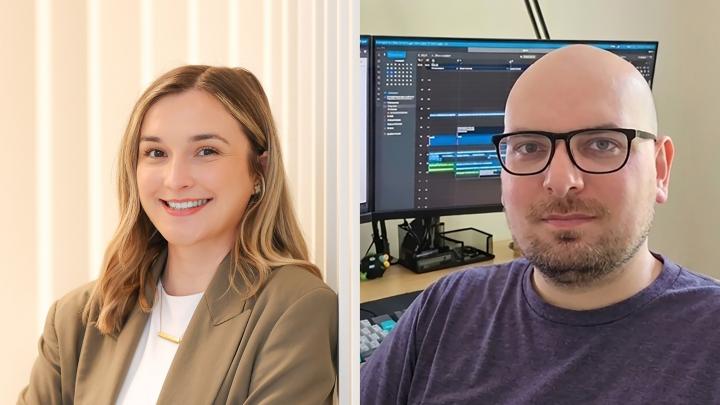
At Liberty IT, career journeys into engineering don’t follow a single path. Amanda O’Prey, now a Senior Software Engineer, and Michael Anderson, an Engineering Manager, each took different routes into tech, from university discovery to apprenticeship learning. Their stories highlight how curiosity, culture and continuous development can shape long-term, rewarding careers in a fast-moving and innovative industry.
Can you walk us through your journey into tech - what inspired you to forge a career in technology and how did you end up at Liberty IT specifically?
Amanda: I enjoyed ICT at secondary school and was always curious about the possibilities in technology, but I didn’t actually write my first line of code until university. I came across Liberty IT while job hunting after graduation and decided to apply. After a long wait I received three offers in the same week. My decision came down to the interview experience: Liberty IT stood out because the interview day felt welcoming and community-focused, which made the choice easy.

Michael: I joined an IT apprenticeship through Belfast Met in 2015 after working in a call centre and realising my interest lay in technology. The apprenticeship route appealed because it let me earn while I learned. Liberty IT stood out during interviews for a number of reasons - the conversation felt genuine, interviewers were clearly passionate about technology, and the office had a relaxed, welcoming vibe. That combination convinced me to join and stay.
Amanda, how did Liberty IT compare to what you expected from a graduate role in tech?
It’s hard to remember all my original expectations, but the sixweek graduate programme really helped me settle in. From day one, I had a dedicated leader who was there to support my individual development, not just oversee project delivery. That ongoing career guidance with people actively supporting your broader growth, not just the current task has exceeded my expectations and made a big difference to my career development.
Amanda, seven years is a strong tenure, what's kept you motivated and growing within the same company?
The people and the company culture. I’ve been lucky to work with very knowledgeable teams and colleagues who are willing to mentor and support you during the learning phase. That collaborative environment set a standard for how I work with others and kept me motivated to stay and grow. And yes, the technical challenges are interesting too.
Michael, what drew you to an apprenticeship over a more traditional university route, and how has that path shaped your career?
I studied event management at university and found the practical, hands-on nature of work more suited to me. The apprenticeship blended structured learning with real responsibility from day one. Being embedded in teams accelerated practical skills, collaboration, stakeholder communication and pragmatic problem solving, which later helped me progress into engineering and leadership roles.
Describe a typical working week for you. What kinds of problems are you solving and what technologies are you working with?
Amanda: I work in Machine Learning Solutions, where I develop, deploy and maintain ML models and work closely with data scientists who design and train the algorithms. A lot of my time goes into productionising models and automating previously manual data processes.
Work varies day-to-day. Some days are smooth whilst others involve debugging and incident response. Technologies I use regularly include Apache Airflow, Snowflake, Databricks, GitHub Actions and Datadog.
Michael: I’m aligned to our Cybersecurity Operations Centre, supporting security analysts and engineers who build tools and automation to improve our security posture and incident response.
My week is varied and busy! It can include management meetings (resourcing, planning, team events), coaching engineers, removing blockers and tracking delivery of technical projects. I also focus on capability building - finding training, guiding career development and improving processes around CI/CD and observability. Technology varies by squad, but the themes are cloud-native services, automation, logging/monitoring, and secure development practices.
What does career progression look like at Liberty IT? Is it purely technical, or are there other paths available?
Amanda: There are multiple paths. My progression has been technical. I joined as a graduate Associate Software Engineer, then moved to Software Engineer and now Senior Software Engineer, but you can continue advancing technically or move into leadership if that’s your interest.
There are also other roles across the business such as Product Designer, Product Owner and Data Scientist, which allow you to stay in the technical space while focusing on different aspects of delivery and product.
Michael: Progression is flexible. We invest heavily in technical development, but we also prioritise soft skills such as presenting, stakeholder management and collaboration. Engineers can follow technical specialist tracks, move into management, or take hybrid roles such as tech lead or product-facing positions. We support these paths with mentoring, training budgets and clear competency frameworks.
For other talented software engineers who'd never considered Liberty IT before, what would be the one thing you'd want them to know about working here?
Amanda: The Liberty IT culture. It’s unique. It prioritises people while driving highperformance engineering. That, combined with flexibility to move internally, makes it easy for engineers to develop new skills and grow their careers in different directions.
Michael: For me, it’s the work-life balance is a genuine priority. It’s visible from the top down: people are encouraged to take breaks, pursue development and build connections with colleagues. That focus makes Liberty IT a place where you can grow technically while maintaining a sustainable life outside work.
From your perspective, what are some of the strengths and mindsets that help people develop and grow at Liberty IT?
Amanda: Growth mindset: being curious, asking questions and treating mistakes as learning opportunities rather than failures.
Collaboration mindset: being willing to pair-program, share knowledge and accept feedback. Learning is faster when people help each other.
Michael: Ownership and curiosity. Liberty IT provides resources and opportunities, but the fastest progress comes from people who proactively shape their own development by bringing ideas, preparing 1:1s and seeking feedback. A collaborative mindset also matters: people who help others succeed tend to accelerate their own growth.
Outside of the technical skills, what's the most valuable thing working in tech has taught you?
Amanda: Working in tech taught me that clear communication, honest feedback and teamwork are essential. It also taught me resilience. Staying calm, investigating methodically and recovering from failures matters more than any single technical trick.
Michael: Success is collective. The best outcomes come when teams pull together - technical ability matters less if you can’t bring others along.
What advice would you give to someone who’s considering a career in tech?
Amanda: Stay curious and be open to continuous learning because tech is always evolving. AI is a great example of that and I’d encourage anyone considering a career in tech to embrace AI as a force multiplier. Learn how to use tools to accelerate development, automate repetitive tasks and prototype ideas faster. Practice prompt engineering, it has become a practical, everyday skill, so building confidence with it early can make a real difference.
Michael: Be ready to learn continuously. Tech moves fast and staying relevant requires effort, but if you enjoy problem-solving and learning, it’s a career with long-term opportunity.
Read the Summer 2026 edition free online →
Stay connected with NI's tech community: