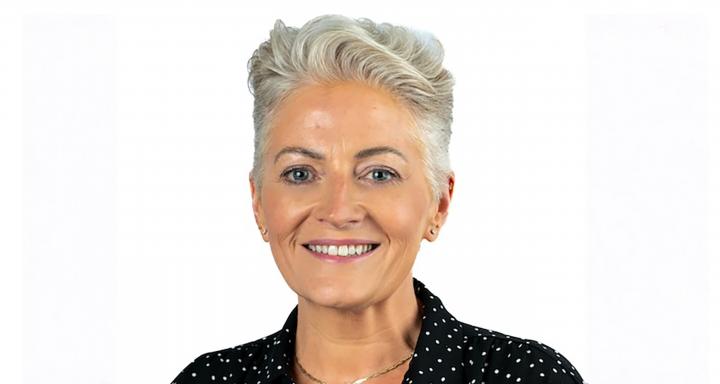
You’ve worked across government, health boards, and now with CGI spanning the UK and Australia. What’s the single biggest shift you’ve witnessed in how health and care systems think about digital transformation?
The biggest shift I’ve seen is that digital transformation has moved from being seen as an IT programme to being understood as a system transformation challenge.
When I first worked in this space, digital was often framed around systems: electronic records, portals, infrastructure, apps. All of that still matters, of course, but the conversation has matured. The real question for intelligent leadership now is not “what technology do we buy?” but “how do we redesign health and care around people, outcomes and sustainability?”

That is a fundamentally different starting point. It means digital is no longer something that sits in the CIO’s office. It touches workforce, finance, clinical practice, social care, community assets, prevention, data ethics, citizen experience and operating models. It requires boards and executives to think differently about risk, value, capacity and partnership.
READ MORE: CGI supports Northern Ireland public sector leaders in strengthening cyber resilience
For me, the most important shift is from digitising existing processes to reimagining how care works. If we simply digitise broken pathways, we make bad processes faster. The opportunity now is to use digital, data and AI to help people access the right care, at the right time, in the right place, from the right people and increasingly, that place should be closer to hom
Data is often described as the lifeblood of modern healthcare, but health systems have historically struggled to unlock its value. Where are you seeing genuine breakthroughs, and what’s still holding the sector back?
The genuine breakthroughs are happening where organisations stop treating data as a technical asset and start treating it as a strategic asset for care, safety, planning and prevention.
We are seeing real progress in three areas. The first is the creation of more integrated views of the person, not perfect, but improving. Shared care records, regional data platforms and interoperability layers are beginning to give clinicians and care teams a more complete picture of someone’s needs. In our work with one client, for example, the digital enablement roadmap identified the need for a regional data fabric, a single view of a person, better flow of data between systems, and data and analytics as core foundations for integrated health and care.
The second breakthrough is operational insight. Data is increasingly being used to understand demand, patient flow, asset utilisation, workforce pressures and community capacity. That matters because the sector cannot simply keep adding more capacity into acute settings. We need to think about the link to public health more generally and see the whole system in near real time and act earlier.
The third is population health and prevention. We are beginning to connect data across primary care, community care, social care, public health and wider determinants of health. In the past this has been the poor cousin in transformation. Addressing it and making it a priority creates the potential to identify risk earlier and design interventions around people and communities rather than institutions.
But there are still big barriers. Legacy systems are one. Data quality is another. Governance can be fragmented, and organisations are rightly cautious about privacy, consent and public trust. There is also a cultural challenge: people will not use data they do not trust, and they will not trust data if they cannot understand its provenance, quality or purpose.
The answer is not to build one giant database fishing from one data lake. It is to create the conditions for safe, ethical, interoperable and purposeful data sharing. That means standards, information governance, cyber security, data quality, clear benefits, and absolute clarity about what problem we are trying to solve. Data is only valuable when it helps someone make a better decision or enables a better outcome.
AI is generating enormous excitement across every sector, but healthcare carries unique risks around patient safety, bias and ethics. How should health systems be approaching AI adoption responsibly, and where is CGI helping clients navigate that?
Health systems should approach AI with ambition, but not hype. I am excited about AI, but in healthcare we have to be very clear: the standard is different because the consequences are different. We are dealing with people’s lives, their rights, their data and their trust.
Responsible adoption starts with the problem, not the technology. What decision are we trying to improve? What harm are we trying to reduce? What administrative burden are we trying to remove? What clinical or operational outcome are we trying to support? If we cannot answer those questions, we are not ready to deploy AI.
The second principle is governance. AI in health needs clear clinical accountability, ethical review, bias testing, explainability, safety monitoring and ongoing assurance. It is not enough to test something once and declare it safe. Models drift, populations change, and healthcare environments are complex.
The third is transparency with the public and workforce. People need to know when AI is being used, what it is being used for, what it is not being used for, and who remains accountable.
At CGI, our role is often to help clients move from curiosity to controlled adoption. That means AI readiness assessments, data maturity work, cyber and privacy assurance, use case prioritisation, architecture, governance and delivery. Our own Health & Care 2035 strategy for the sector positions AI as part of a secure-by-design transformation agenda, not as a standalone technology play.
As you look into the future, what does a digitally transformed, community-centred health and care system in the UK actually look like for an ordinary patient? And what’s the realistic path to getting there?
For an ordinary patient, a digitally transformed, community-centred system should feel simpler, more joined up and more human.
It should mean I do not have to keep repeating my story. The people involved in my care can see the right information, with the right permissions, at the right time. I can access advice, appointments, results and care plans through channels that work for me. If I am living with a long-term condition, I can be supported at home with remote monitoring, self-management tools and clear escalation routes. If my health starts to deteriorate, the system can spot that earlier and intervene before I reach crisis. A digitally transformed system is not one where everyone has more apps. It is one where technology removes friction.
READ MORE: AI as a people strategy: what we’ve learned from rolling out generative AI at scale
The realistic path is incremental, not magical. We need to build the foundations first: cyber resilience, interoperability, data quality, digital identity, cloud, legacy modernisation and workforce confidence. Then we need to prioritise high-value pathways where the case for change is strongest for example in frailty, long-term conditions, discharge, urgent care, maternity, mental health, and prevention.
We also need demonstrators that prove what works. CGI’s 2035 Challenge frames this well: we think of places like West Wales as whole-system test beds, prove the blueprint, measure the benefits, and then scale what works rather than endlessly reinventing locally.
The future I want to see is not technology replacing human care. It is technology creating the capacity for more human care. Less duplication, less waiting, less fragmentation, more prevention, more dignity, more trust.

Read the Summer 2026 edition free online →
Stay connected with NI's tech community: