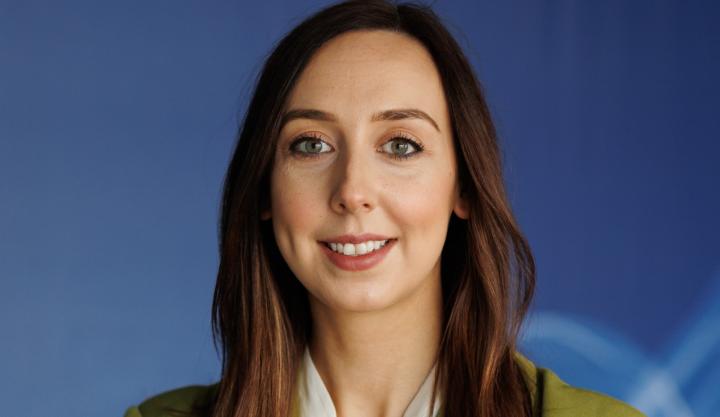
By Ruth McGuinness, CEO Actonomy, a Kainos AI company
When people ask me how I ended up working in artificial intelligence, my answer is simple: curiosity.
I have always been drawn to technology that is not yet commonplace. Before AI became part of everyday conversation, before every organisation was asking how it could use it, I was interested in what it could become and how it could change the way people work.
That curiosity brought me to Kainos at a time when AI was still an emerging field. There was no well-trodden career path into artificial intelligence in Northern Ireland. In many ways, it was a case of being the right person, in the right place, at the right time. I joined what was then an innovation concept and helped build it into a major artificial intelligence business.
Today, AI is no longer niche. It is becoming a general-purpose technology with relevance to every sector, every organisation and, increasingly, every role. That creates huge opportunity, not just for businesses, but for people who want to build meaningful careers in technology.
At Kainos, we are best known for building the digital backbone of UK Government. Our teams have helped create many of the digital services people use at key moments in their lives, from applying for a passport and taxing a car, to booking NHS appointments, registering a birth or accessing essential public services.
That work matters because it is not abstract technology. It is technology that millions of people rely on. It has to work, it has to be accessible, and it has to be built around real human need.
Now, AI gives us the opportunity to take that work further. It can help us build services faster, improve quality, remove unnecessary complexity and make digital systems more responsive to the people who use them. But at Kainos, ourambition is not only to use AI in our work. We are investing in building AI tools ourselvesand ensuring this becomes part of our legacy.
There is, understandably, a lot of debate about what AI means for jobs. It is one of the questions I am asked most often. My view is shaped by what I see every day: AI is not removing the need for people. It is changing what people are able to do.
The mission of my team is to augment human creativity. Used well, AI can reduce time spent on repetitive, admin-heavy tasks and create more space for the work that needs human judgement, creativity and empathy. It can give people more time to talk to customers, think strategically, solve problems and develop new ideas.
I have seen that in my own role. AI tools help me reduce the time I spend on routine tasks so I can focus more on my team, our customers and our long-term strategy. I see it too in our graduate intake. This year, we are welcoming what we describe as an AI-native graduate cohort: people who will use AI tools to build software from the beginning of their careers. That gives them the chance to contribute to strategic thinking and problem-solving much earlier than might previously have been possible.
That is what excites me most. AI can make careers more creative, not less. It can help people get started, overcome barriers, adapt to different working styles and build confidence.
It is also creating new roles that did not exist before. At Kainos, we built our responsible AI capability ahead of the curve because we believed from the beginning that artificial intelligence must be developed with people in mind. It is not enough to ask whether something works technically. We also have to ask what the unintended consequences could be, how users will experience it, and whether it is being applied in a safe and ethical way.
That responsible, human-centred approach is now a core part of how we work. It is one of the things that sets Kainos apart, particularly in areas such as government, healthcare, financial services and other highly regulated sectors where trust, governance and accountability are critical.
The future of AI will not be built by one type of person or one type of skillset. One of the most important messages I would share with anyone considering a career in this field is that you do not need to have started your career in AI. Many of the people in my team did not. Some began as software engineers, others came from different backgrounds entirely. What they had in common was curiosity, adaptability and the ability to think about technology in the context of real people and real-world problems.
That blend of technical understanding and commercial awareness is incredibly valuable. We often talk in technology about “unicorns”, people who can understand how something works, but also why it matters. At Kainos, we look for people who are interested in both.
There can be a lot of imposter syndrome in AI because the field is moving so quickly and because it can seem intimidating from the outside. But nobody has all the answers. The technology is evolving every day. The most important thing is to start, to stay curious and to be willing to learn.
That is why this is such an exciting time to join Kainos. We are advertising for over 340 new roles in Northern Ireland, creating opportunities for people who want to work on technology with impact, scale and purpose.
For anyone looking at those roles and wondering whether they belong in this industry, I would say: you do. AI needs a diverse group of people shaping its future. It needs different perspectives, different experiences and ways of thinking.
The next generation of AI careers will not just be about building technology. It will be about building technology responsibly, creatively and in a way that makes life better for the people who use it.
At Kainos, that is the work we are doing every day: helping to build the digital backbone of government, creating AI tools that support the future of work, and opening up new opportunities for people who want to be part of what comes next.
If you are curious, ambitious and ready to learn, there has never been a better time to start.
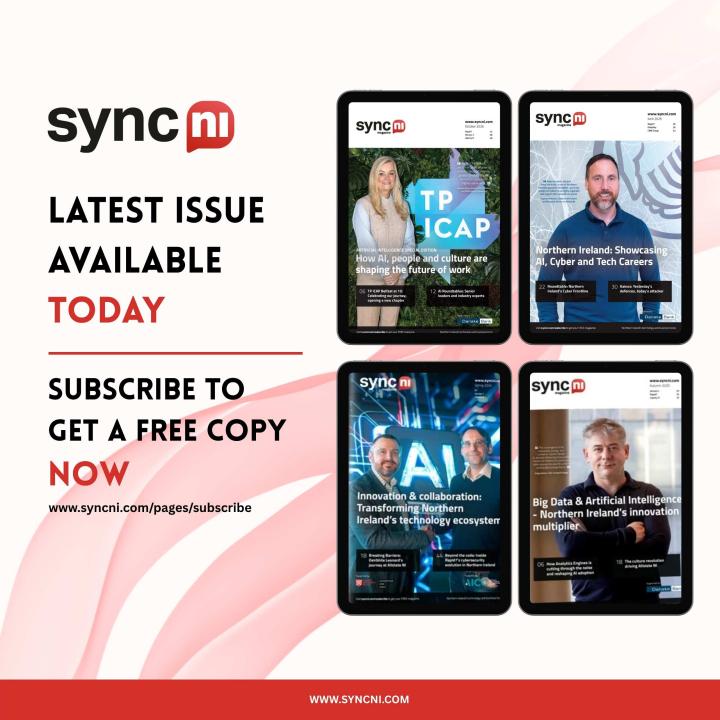
Read the Autumn 2026 edition free online →
Stay connected with NI's tech community: