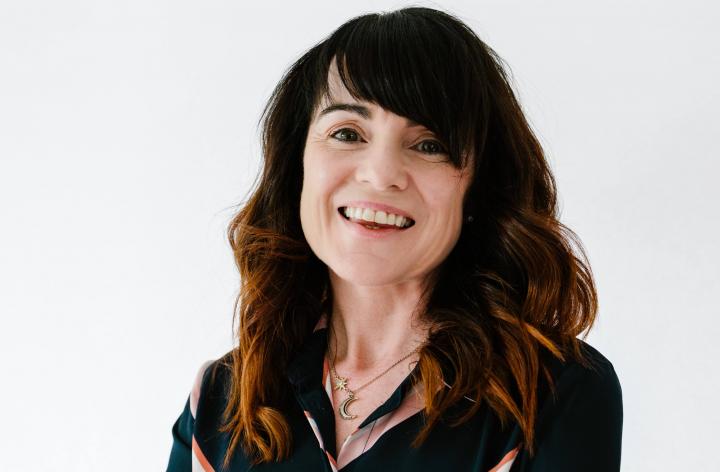
Professor Maura McAdam, Full Professor of Entrepreneurship, DCU Business School
Ask most managers and leaders how AI is changing their organisations and they will typically talk about tools, tasks, adoption and productivity. But rather than asking what will AI change, a more interesting question is, who gets to shape that change?
Technology does not arrive in organisations as a neutral force. It enters workplaces that already have cultures, hierarchies, assumptions and established ways of working. After more than two decades researching entrepreneurship, gender and digital transformation, I’m particularly interested in what happens when new technologies meet those existing structures. My work has consistently sat in this socio-technical space, the intersection between people and technology. And for me,one lesson has remained consistent,technology may create the possibility of change, but people and organisations determine what that change becomes, and even more importantly, that they own that change.
AI may be considered new, but many of the questions it raises are not. Who has access? Who feels confident enough to experiment? Whose expertise is recognised? Who gets heard? Who belongs? Who gets to lead? That is why I believe the future of AI at work is actually a conversation about people, leadership and culture.
AI literacy matters, but it is not enough
People need to know how to use emerging tools, how to question their outputs and how to recognise their limitations. But technology keeps changing, and today's expertisecan quickly become tomorrow's basic skills. However, what does endure, is the capacity to keep learning and adapting. That means staying curious, thinking critically, trying new things and having the confidence to challenge established ways of doing things.
We often refer to these (sometimes dismissively) as“soft skills”. But as AI becomes part of how we work, I would argue that they are becoming some of the most important skills we have.
When almost anyone can produce a half decent answer or polished first draft in seconds, the value shifts to asking better questions, exercising judgement and knowing which answers to trust.The ability to ask a good question may become just as important as the ability to provide an answer.
We need permission to experiment
This connects with my work on entrepreneurial mindset, intrapreneurship and the ideas underpinning my recent book, Permission Granted. One thing Ireally encourage is starting small, trying things out and learning as we go. Another is making "smart mistakes", where something that does not work becomes something that we can learn from rather than something to hide or be embarrassed about. And that really matters for AI adoption.You cannot create an innovative culture while also creating one where people are afraid to get things wrong.
Technology does not automatically create equality
There can be an assumption that technological progress automatically creates social or organisational progress. My research on gender, entrepreneurship and digital entrepreneurship suggests we should be much more careful about that assumption.Moving activity into a new technological environment does not automatically remove the inequalities, assumptions and structures that came before.
So, organisations need to ask difficult questions.
Who has access to AI tools and training? Who is encouraged to experiment? Who feels able to put their hand up for the new project? Whose knowledge is considered legitimate? And, importantly, who is in the room when decisions about technology are being made?These might sound like questions about inclusion rather than AI.They are both.If access, confidence and organisational permission are uneven, AI risks reproducing existing inequalities in a new form.
"I don't know. Let's find out."
Managers and leaders also need to acknowledge the uncertainty surrounding AI. People have questions about what technological change means for their roles and futures. Avoiding those conversations does not make the uncertainty go away.However,involving people in how AI is introduced. being transparent about decisions and creating genuine opportunities to shape change can make a difference.
We need to protect human connection
There is one further element of this transformation that I think deserves much more attention and that is how we connect and network, and for me networking is really just human connection. Digital-first work has already altered many of the ways relationships develop inside organisations. Remote work, online communities, and carefully curated social media feeds, has meant that the chat in the queue for coffee, the informal mentoring, the unplanned bumping into someone doesn’t happen as often as they once did.
My early research examined networking as a relational and social phenomenon. Strong networks do not simply happen. They have to be nurtured. In my book, the call to action related to networking is actually callednetworking because that’s what it is – work, time and effort. So, in an AI-enabled workplace, human connection increasingly needs to be designed intentionally- not in a cold strategic, way but in a human way. That may meanscreating opportunities for people to work through problems together or making room for mentoring and conversations that do not always have a predetermined agenda. It also means asking of every AI initiative not just, "What time will this save?" but also, "What will this change about how our people relate to one another?"
I called this “Inclusive Human Potential”, ensuring that technology creates greater possibilities for people without inadvertently weakening the relationships, networks and sense of belonging that allow them to flourish.
Culture will be the differentiator
The organisations that will continue to thrive will be the ones that keep learning, treat experimenting as normal and don't expect anyone to have all the answers. They'll value expertise wherever they find it, give people a say in how technology reshapes their work, and help them adapt rather than just absorb. And most importantly, they'll use technology but without letting it erode the human connection that holds everything together.
AI will change what we do.But people and culture will determine who gets to participate, who gets to lead and, ultimately, what we choose to do with the possibilities it creates.

Read the Autumn 2026 edition free online →
Stay connected with NI's tech community: