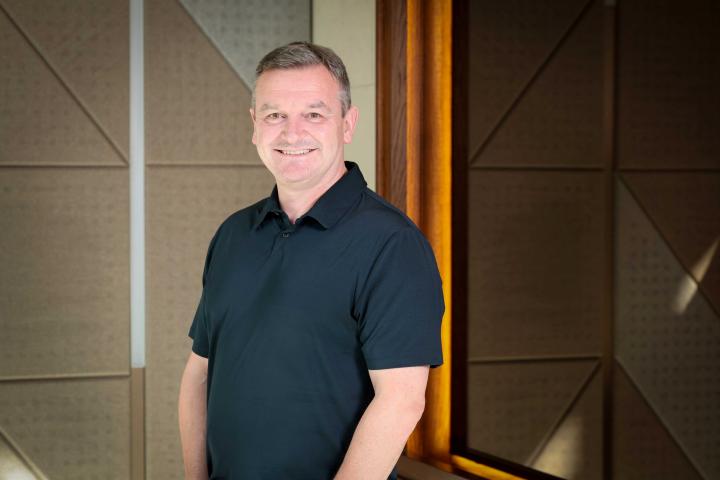
Artificial intelligence may be transforming how software is built, but according to Liberty IT Managing Director Tony Marron, technology alone will not determine which organisations succeed in the years ahead.
The newly appointed Global Engineering Capability Lead for Liberty Mutual Insurance believes the real differentiator will be engineering excellence and the people who know how to apply AI effectively.
Tony's appointment expands his remit beyond leading Liberty IT's operations across Belfast, Dublin and Galway. In his new role, he will help shape engineering practices across Liberty Mutual's global technology organisation, providing leadership and direction to a worldwide community of more than 5,500 engineers.

READ MORE: AI Beyond the Hype: What Northern Ireland's Tech Leaders See Coming Next
It is a significant milestone for someone who joined Liberty IT as a software engineer in 2001 and has spent more than two decades progressing through leadership and technology roles. However, Tony sees the appointment as reflecting something much broader than personal achievement.
"It highlights the value of the engineering capability we have built across Liberty IT and the important role our people play within Liberty Mutual's global technology organisation," he says.
At a time when AI dominates technology discussions, organisations must look increasingly beyond the hype and focus on the those fundamental engineering foundations needed to create lasting value.Generative AI has rapidly moved from experimentation to mainstream adoption, with software development among the professions experiencing the greatest impact.
Developers now have access to tools that can generate code, automate testing, assist with documentation and accelerate research. While these capabilities are changing how teams work, Tony argues that they also increase the importance of human expertise.
"The advantage won't come simply from having access to AI," he explains. "It will come from knowing where to apply it, how to guide it and how to integrate it into the way organisations operate."
Rather than replacing engineers, he believes AI is changing the nature of their work.As automation takes over more routine tasks, engineers can spend more time solving problems, designing systems and creating business value. Skills such as critical thinking, judgement and collaboration become increasingly important in environments where AI can generate answers but people remain responsible for making decisions.
For technology professionals concerned about how AI may affect their careers, Tony's message is clear: demand for skilled engineers is not disappearing. It is evolving.
Tony describes the current period as the beginning of an "intelligence era", where AI becomes deeply embedded in how organisations operate.Unlike previous technology shifts that focused primarily on automation, AI has the potential to augment decision-making, accelerate innovation and reshape entire workflows.This transition is already changing expectations of engineering teams.
Software engineers are no longer simply writing code. They are increasingly responsible for evaluating AI outputs, designing systems that combine human and machine intelligence, and ensuring technology is deployed safely and effectively. The organisations that will thrive during this transition will be those willing to rethink how work gets done.
Tony asserts"Every organisation needs to understand where AI can create value in its business and build the capability, governance and culture needed to support it."
One of the most significant developments on the horizon is agentic AI.Unlike traditional AI tools that respond to prompts, agentic systems can execute multiple tasks, make decisions and pursue objectives with limited human intervention. Many observers describe them as digital workers capable of managing complex workflows.
For Liberty IT, however, introducing agentic AI is not simply a technology project, successful adoption depends on ensuring these systems work alongside people and fit within existing operational processes.
"Technology is only one part of the challenge," he explains. "It also needs to work within how organisations operate and how people do their jobs."
This requires strong engineering discipline, clear governance and careful consideration of how humans and AI interact.While the capabilities are advancing rapidly, Marron believes organisations must remain focused on building solutions with their people, not around them and not to replace expertise but to extend it.
As AI becomes increasingly capable, the role of the software engineer is expected to change significantly. The most successful professionals will be those who combine technical skills with adaptability, curiosity and a strong understanding of business challenges.
Many routine development tasks are already being accelerated by AI tools. As those capabilities improve, engineers will spend more time on architecture, problem-solving, innovation and strategic thinking. Within this context learning and development therefore become ever more important.
Liberty IT has long invested in building a culture of continuous learning, and Tony believes this mindset will be critical for navigating future changes.Technology will continue to evolve, but professionals who embrace new tools and understand how to apply them effectively will remain in demand.The emphasis shifts from simply producing software to creating meaningful outcomes.
Tony's appointment also highlights the growing international influence of Northern Ireland's technology sector.Since establishing operations in Belfast in 1997, Liberty IT has become one of the region's most significant technology employers, helping to develop generations of engineering talent.
Today, expertise developed across Liberty IT's Belfast, Dublin and Galway offices is helping shape engineering practices throughout Liberty Mutual's global organisation, a US-based insurance giant headquartered in Boston and employing more than 40,000 across 27 countries.
For local technology professionals, Tony's career path demonstrates the opportunities available within the sector.A software engineer beginning their career in Northern Ireland can now aspire to leadership roles that influence global technology strategy. That reflects both the maturity of the local technology ecosystem and the reputation it has earned for engineering excellence.
READ MORE: Liberty IT Invests in Next Generation Tech Talent with 40 Graduate Hires
While AI will continue to reshape software engineering, Tonyremains optimistic about the future of the profession.Technology will become more capable. Agentic systems will become more sophisticated. New ways of working will emerge.Yet he believes the organisations that gain the greatest advantage will not necessarily be those with access to the most advanced technology.
They will be the ones with the strongest engineering cultures and the people capable of applying AI in ways that create real value. For Northern Ireland's technology sector, that presents a significant opportunity.
As the industry enters what Tony calls the intelligence era, success will depend not simply on the tools available, but on the engineers, leaders and teams who know how to put those tools to work. A future where human expertiseremains at the centre of innovation.
Read the Autumn 2026 edition free online →
Stay connected with NI's tech community: