By ALAN BRANAGH Founder NETZERO Alchemist
At Belfast Harbour, physical clean-up comes first. AI can help turn what is collected into evidence, reveal patterns and improve what happens next.
Stand beside a harbour or marina for long enough and you begin to see the same pattern. The team clears bottles, packaging, leaves and traces of oil from the water.
The tide turns, the rain falls, the river carries more downstream and the work begins again. Most of that pollution did not begin in the marina. It is simply where it comes to rest and where people see it. They do not see the cleaning schedule or the hours behind it. They see the water, and judge the care of a place by what is visible.
READ MORE: From AI Hype to AI Literacy: Why Northern Ireland Must Focus on People, Not Platforms
The harbour team inherits a problem it did not create and a responsibility it cannot ignore. That was the challenge facing us at Belfast Harbour Marina.
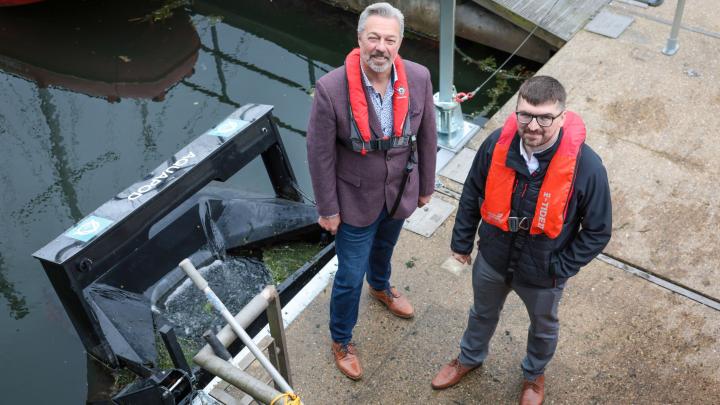
The UK's first marina Aquapod now sits just below the waterline there, drawing in floating litter, natural debris and microplastics. It intercepts material as it arrives andreduces repetitive manual clean-ups on the water.
The water did not need another report. It needed something to remove what was already there. Clean Impact View records the work: what was recovered, how much, where and when. Add weather, tides and operating information and rubbish that was once removed and forgotten becomes evidence.
Much of the conversation about AI begins at the wrong end. AI cannot lift a bottle from the water. It cannot remove an oil film or empty a collectionbag. Data on its own gives us a more accurate description of dirty water.Once the physical work is happening and being recorded consistently, AI begins to earn its place.
A harbour team may know from experience that heavy rain brings more polystyrene, or that a particular corner fills after the tide changes. AI can test that instinct against the
record. It can find patterns across months of images and collections, draw attention to an unusual change and help anticipate when equipment needs to be emptied.
In time, it may also help answer the more important question: are we repeatedly clearing the symptom while the source remains further upstream?
None of this removes the need for human judgement. The knowledge held by those who work beside the water remains essential. AI gives them another way to see what is
changing and decide where attention is needed.
It also requires honesty. A measured weight, an estimate and an inference are not the same thing. If software blurs those distinctions, weak information quickly acquires the
appearance of certainty. This is where technology meets stewardship. Belfast Harbour is not the source of everything carried down the River Lagan. It has chosen to take responsibility for what arrives in a place entrusted to its care. Stewardship is leadership made visible.
READ MORE: Cracking the Code on Rogue AI: What Really Happened at Hugging Face
Northern Ireland has a long maritime tradition and a growing capability in AI. We now have an opportunity to bring the two together around a real problem, in a real place.
If AI can help us understand what keeps arriving, where it comes from and what should happen next, it will have earned its place.
The test is not how intelligent the technology appears. It is whether the water is cleaner and whether we can prove the difference.People trust clean spaces. That trust begins with what they can see.

Read the Autumn 2026 edition free online →
Stay connected with NI's tech community: